Pages

Showing posts with label communication. Show all posts

Monday, August 22, 2016

New Business Book Summary Available for Hear & Now


 Hear & Now
According to Chris Davidson, more than half of women in the workplace feel their voices are not truly being heard. However, in Davidson's experience, the female communication model is the more successful one to follow for effectively communicating in the workplace. In Hear & Now, Davidson offers several methods for boosting confidence when communicating in the workplace.

Friday, May 20, 2016

New Business Book Summary Available for Presentation Advantage

 Presentation Advantage

Presentation Advantage by Kory Kogon, Dr. Breck England, and Julie Schmidt provides individuals with detailed, practical guidelines for creating successful presentations. Through examples, case studies, and references to Stephen R. Covey's principles, the authors describe both the philosophy and the literal tasks presenters must follow to be effective.

Friday, May 6, 2016

New Business Book Summary Available for The Genius of Opposites

 The Genius of Opposites
In The Genius of Opposites, Jennifer B. Kahnweiler explores the importance of building relationships in the workplace. Using interviews from over 40 introvert/extrovert partners across varying professional fields, genders, ages, nationalities, and organizations, Kahnweiler embarks on a massive study to determine how to help introverts and extroverts acknowledge differences, embrace them, and ultimately achieve the most optimal working relationships.

Friday, December 18, 2015

New Business Book Summary Available for On Message

 On Message
In On Message, Theo Theobald outlines a new strategy for communicating online. As more people rely on the Internet for news and information, communicators can reach larger, more diverse, and more active audiences than ever before. While this has leveled the playing field and provided new opportunities for many people, the new challenge is crafting messages that will be heard over the multitude of messages online. To reach an audience in this crowded arena, Theobald endorses a strategy of crafting consistent, engaging, and substantive messages that respond directly to an audience’s specific desires and needs.

Friday, October 16, 2015

New Business Book Summary Available for No One Understands You and What to Do About It

 No One Understands You and What to Do About It

Individuals are often misunderstood by others, despite what they consider to be their best efforts to communicate clearly. This disconnect can create many issues, both in the business world and in an individual’s personal life. At the heart of the problem is the fact that many people are unable to accurately see themselves as others see them. They simply do not know how they are perceived, so they cannot make adjustments to present their true selves. In No One Understands You and What to Do About It, Heidi Grant Halvorson explains the unconscious drivers behind the misperceptions people have about one another and provides a practical guide to making sure the impressions individuals make are exactly the ones they want to make.

Friday, July 17, 2015

New Business Book Summary Available for Pitch Perfect

Verbal communication is one of the most important skills in a person’s work life. The words people choose to use in a situation, the tone of voice they adopt, their ability to express themselves concisely, and the interest they show in what others have to say can all contribute to success in landing a job or a promotion, making a sale, or closing a deal. In Pitch Perfect, Bill McGowan, a communications consultant and former television news producer, and Alisa Bowman outline seven principles anyone can put into practice to achieve pitch-perfect communication skills.

Friday, March 27, 2015

New Summary Available for Your Perfect Presentation


In Your Perfect Presentation, Bill Hoogterp conveys many important principles of public speaking, such as the importance of telling stories, the unique value of obtaining constant feedback, and the need for continual improvement. Focusing first and foremost on dramatically improving individual presentations, Hoogterp also applies the same principles and techniques to conducting meetings and conference calls, hosting and participating in panel discussions, giving motivational speeches, and developing and delivering effective elevator pitches.

Friday, February 13, 2015

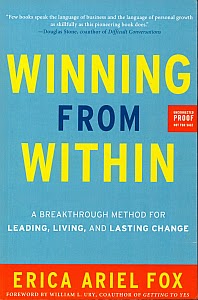
New summary available for Winning from Within


Winning from Within provides a road map to aid readers in understanding their inner landscapes and develop more agility to access all their intrinsic leadership characteristics. It provides a seven-step method for closing the “performance gaps” so many people have in key conversations between what they know they should say or do with their actual behaviors. Using real-life case studies from coaching clients in business critical or personally meaningful conversations, Erica Ariel Fox helps readers learn to navigate high stakes interactions—from business deals, client calls, and team meetings to family arguments, landlord disputes, and parent-teacher conferences—to improve results at work and achieve more of what matters most to them.

Wednesday, December 24, 2014

New summary Available for Resolving Conflicts at Work


In Resolving Conflicts at Work, Kenneth Cloke and Joan Goldsmith help readers understand the underlying causes of conflict and how to approach it in new ways. Conflicts at work arise because companies are made up of diverse group of people with different communication styles and differing expectations. Few people have been trained to resolve conflict in a healthy manner, which is why conflict is common in every workplace. Transformation does not occur until people first resolve how they became stuck in conflict and take time to develop new strategies. When an organization operates with a culture where conflicts are avoided, honesty and creativity is lost in the process. People need to take time to look inward and understand what conflict means to them and how their perceptions impact the way they respond to these situations.

Wednesday, November 26, 2014

New summary available for Humanize


Humanize is a guide to restructuring organizations based on the principles of social media. Authors Jamie Notter and Maddie Grant provide recommendations for overcoming hierarchical structures, disengaged employees, best practices, monoculture, risk, and formal processes to become more human. They advocate open internal and external communication, including uncensored use of social media. Organizations need to build open, honest relationships. Human organizations must learn how to become open, trustworthy, generative, and courageous.

Friday, May 23, 2014

Negotiating Success

Negotiations occur in every aspect of our lives. Often people view negotiations as win-lose situations. However, it does not have to be that way. In Negotiating Success, Jim Hornickel suggests that “mutuality” is an effective way of approaching negotiations with the ultimate goal of having both sides win. He outlines techniques that can be used to build rapport with negotiating partners and reach the best possible outcome.

Friday, April 18, 2014

As We Speak

As We Speak provides the tools and techniques that will help speakers improve their communications with others, whether it be at a meeting, a large presentation, or in one-on-one interactions. By learning to speak with intent and clearly understand what the listener cares about, a speaker can learn to establish a bond with the listener, which is critical if the speaker wishes to influence. Peter Meyers and Shann Nix explain the variety of opportunities speakers have to communicate with their audiences beyond the spoken word, including their eye contact, vocal techniques, facial expressions, and body language. This valuable knowledge can assist any individual in strengthening their communications skills.

Friday, April 11, 2014

I Hear You

In I Hear You, Donny Ebenstein presents a blueprint for business professionals that outlines how they can learn how to communicate in a kind and constructive manner that helps to get things done. By showing people how to alter established mental patterns, Ebenstein sets the stage for business professionals at all stages of their careers to become better at the difficult conversations that can cause conflict in the workplace. He teaches people how to shift perspective, overcome their own defenses, and make important changes happen in the workplace.

Friday, March 28, 2014

How to Talk to Absolutely Anyone

Effective communication skills are essential in every aspect of life. When done well, communication can lead people to the mutual understanding that is needed to make progress. Unfortunately, many people feel that they do not have the confidence or skills required to talk with others. This may be due to fear of rejection, concerns about how one appears to others, or a lack of comfort talking to people one does not know. In How to Talk to Absolutely Anyone, Mark Rhodes provides a four-stage framework for personal interactions and provides practical tools to help people become better at talking to others in any environment.

Friday, January 10, 2014

The workplace has become project-driven to the point that project management is not only a business activity but an academic field and profession unto itself. While many resources exist for improving communication among members of project teams, there is a gap in the project management profession for tools that facilitate communication with other stakeholders. In The New One-Page Project Manager, Clark Campbell and Mick Campbell fill that void by augmenting existing tools and methodologies with the One-Page Project Manager (OPPM), a simple graphic interface that communicates plans and tracks performance relative to them. This updated edition will help project managers take advantage of the new AgileOPPM™ and the MyOPPM™ template as they work to improve their up, down, and out communication.

Friday, December 27, 2013

A leader’s level of influence is determined by their ability to engage and inspire others into action. Unfortunately, most leaders do not know how to engage others. They do not realize that by purposefully sharing their real life experiences, deep connections can be forged with audiences. In Hooked, communication experts Gabrielle Dolan and Yamini Naidu explore the powerful skill of “business storytelling.” By providing the necessary framework for crafting and delivering effective business stories, the authors demonstrate not only how people can increase their leadership presence, but also how they can get their colleagues and customers to act.

Friday, December 6, 2013

As a renowned communication professional, Dr. Frank I. Luntz often finds himself in conversations with some of America’s greatest businessmen, politicians, entertainers, and athletes. It is through these unique opportunities that Luntz comes to recognize nine discernible personality traits that are common amongst the most successful “winners” and how they are conveyed through language. Drawing from dozens of interviews and recollecting numerous stories, Win is Luntz’ account of these characteristics and the part each plays in building a success story—one in which an individual recognizes a weakness or deficiency in the human experience and then offers a solution to fill the void.

Friday, November 8, 2013

In The Snowball Effect, Andy Bounds describes how important it is to create successful communications that lead to significant time savings, increased productivity, and strengthened relationships. In business, effective communications lead to individuals enjoying work more, writing winning proposals, getting job interviews, persuading others to say “yes” when it matters most, initiating meetings that generate actions, and saving significant time by eliminating or limiting lengthy meetings and decluttering email inboxes. For people to improve communications and make the changes permanent, they need to first build a foundation, like that of a snowball’s core, then add techniques one at a time, as if making a snowball.

Monday, October 7, 2013

In How to Present, certified speaking professional Michelle Bowden demystifies the art of delivering a clear and compelling message to which the target audience responds positively. She breaks the process into three phases: analysis, design, and delivery. Presentations fall flat when presenters focus on what they have to say, without addressing what the audience wants and needs to hear. They fail to convince when they are unclear on where their audience is, where they want them to be, and how to get them there. Bowden explains how to understand an audience, how to structure a message to reach it, and how to deliver the message in a confident, consistent manner. She debunks persistent myths about public speaking, substituting sound advice about warming up mind, body, and voice, so that every presentation produces positive results.

Tuesday, March 29, 2011

The Cost of the Generational Divide

The generation gap is most often noticed when older workers are trying to mentor or motivate younger workers, and younger workers are not receptive. The younger workers complain they just want to hear the company goals and be set free to work rather than be forced to sit through a pep rally.


The older workers complain the younger workers do not respect tradition and have no sense of teamwork or any work ethic, for that matter. This kind of miscommunication happens all the time in companies all over the nation.

Every employee is valuable and brings skills and talent to the table. Miscommunication and conflict across generations impact a company’s productivity and bottom line.

Lost revenue and turnover, costly consequences of the generational divide, can be averted if managers learn to bring employees together.

Generational harmony impacts a company’s profitability. In 2005, it was predicted that unemployment would be at five percent at the end of 2006.

Low unemployment and steady job growth usually makes employees comfortable enough to look for jobs with better opportunities and better benefits. It was predicted that by 2010 the United States would be short 10 million workers with the right skills.

The U.S. was short only three to four million workers in the late 1990s, and hiring managers were scrambling to fill empty chairs. Organizations need a plan to recruit and retain employees from all generations with the right skills.

Turnover is expensive, costing “50 to 150 percent of a departing employee’s annual wage.” It is time for organizations to assess the demographics of their workforce to make sure they have the “bench strength” for projected retirements.

Managers can take the following actions to immediately improve retention:
• Evaluate age of workforce.
• Develop strategies to attract and retain those about to retire.
• Identify ways to operate more efficiently.
• Create a formal process to assess manpower over the next five to 10 years.
• Evaluate current turnover.
• Establish two-way communication on all issues.
• Assess skill development commitments.
• Proactively work to retain talent.

Managers should be developing strategies to coax ready-to-retire workers into semi-retirement so they can mentor younger workers to do their jobs. Employers should not only be thinking of ways to retain quality employees, but also how to retain valued customers and colleagues. Generational misperceptions can injure these critical business relationships.

People are a business’s key resource. It is the people that make a company successful. Managers need to understand the demographics of their workforce, and to do whatever they can to retain and develop the skills of all their employees, regardless of generation. This plan of action will minimize turnover and increase the bottom line.

Bridging the Generation Gap was written as a reference tool for managers confronted with recruiting, retaining, and balancing the needs of five generations of employees. To access the book summary, please go to BusinessSummaries.com.